
 By:
By: We've all rage-clicked off a site.
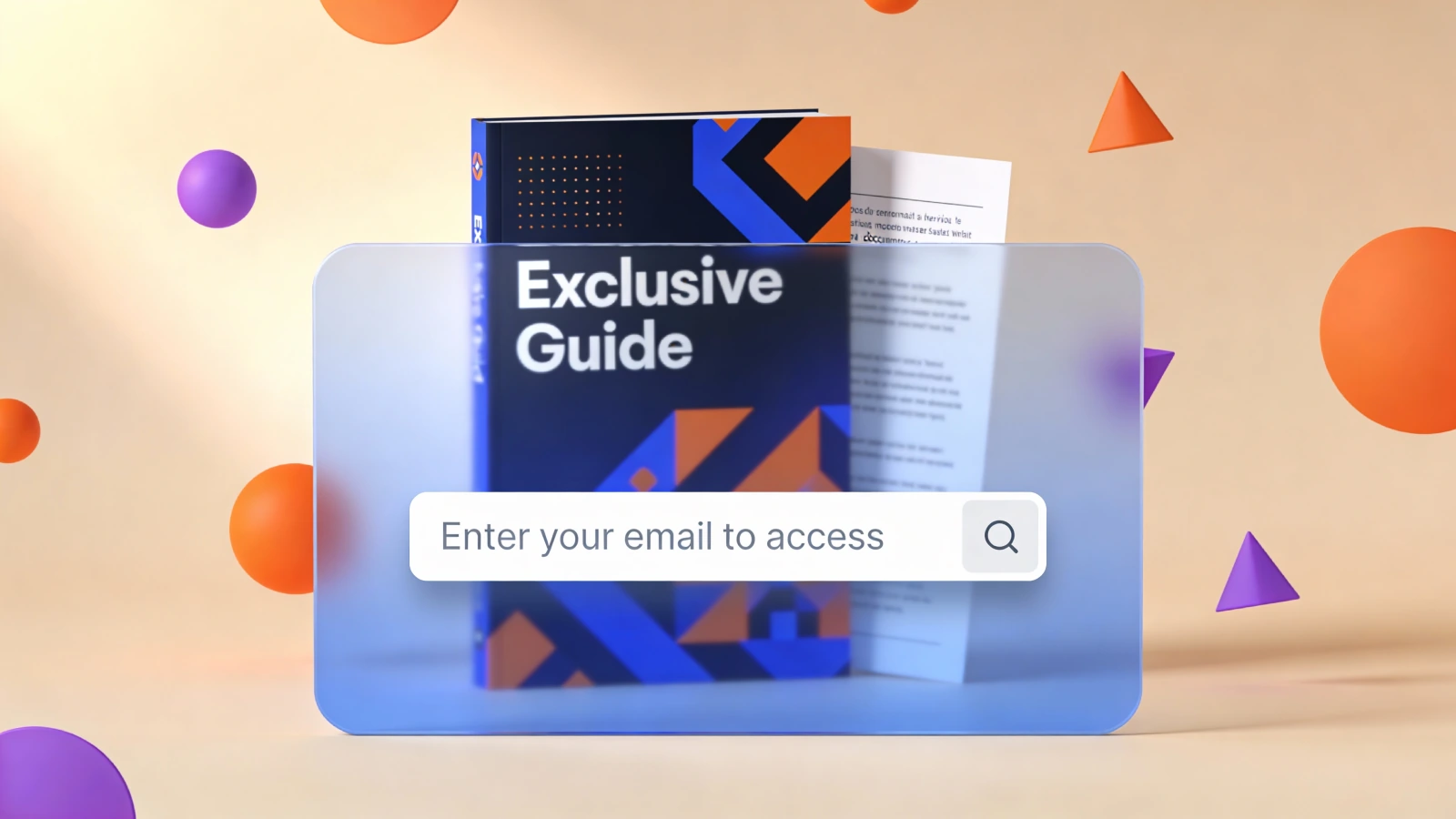
You're reading something useful. Getting value. Then bam - a wall. "Enter your email to continue." You haven't even seen what you'd be signing up for.
Close tab. Move on. Never return.
That's bad gating. It treats readers like ATMs instead of people.
But gating itself isn't the problem. Badly executed gating is. Done right, it feels like a fair exchange. Done wrong, it feels like extortion.
The stakes are real: according to Content Marketing Institute research, 71% of B2B buyers report being disappointed by gated content. That's a trust-destroying experience you can avoid with the right approach.
Here's how to do it right.
Why Content Gating Fails (And Annoys People)
Let's name the sins. You've experienced most of these:
The Ambush Gate. No preview, no context. Just a form demanding your email before you see anything. How do you know the content is worth it? You don't. Bounce.
The Greedy Form. Email, first name, last name, company, job title, company size, phone number, annual revenue. For a checklist? Hard pass.
The Irrelevant Ask. You're reading a beginner's guide. You're early in your research. And they want to schedule a sales call? Wrong stage.
The Bait-and-Switch. The headline promises "complete guide." You hand over your email. You get a 3-page brochure with generic tips. Trust gone.
The Endless Nurture. You downloaded one thing six months ago. You've received 47 emails since. You don't even remember what the original content was.
Chelsea Castle, Director of Content Marketing at Chili Piper, described this exact experience: "I'm not a lead, I'm not interested in buying. I just wanted to read your content." Her takeaway? "That experience has left a bad taste in my mouth. Will I ever download your content again? Probably not."
Every one of these creates resentment. Resentment kills conversions.
The Psychology of a Fair Exchange
Good gating works because it feels fair. Not manipulative. Not desperate. Fair.
Three elements make it feel that way:
1. You've earned the right to ask.
You don't ask someone to marry you on a first date. You don't ask for an email before you've delivered any value.
Let them read something first. Let them see your content is worth their time. Then ask.
2. What they get exceeds what they give.
An email address is a small ask. But it's not nothing. They're trading attention and inbox space. They're accepting future marketing.
Make sure what they receive is clearly worth more than what they're giving up.
3. They can see what they're getting.
No mystery. Show them the content - or at least enough of it - before the gate. They should know exactly what they're exchanging their email for.
Tactic 1: The Partial Preview
Let them browse before you ask.
Show the first few pages of your ebook, report, or catalog. They see the quality. They see the depth. They get invested.
Then gate page 4 or 5.
By that point, they've made a small commitment. They're curious about what comes next. The email ask feels reasonable because they already know the content delivers.
This is exactly how Flipbooker's lead generation works. Upload your content, set which page triggers the gate, and let readers preview before you ask.
Compare this to gating a PDF download where they can't see anything. Preview converts better because trust is established first.
Where to set the gate:
- Ebooks: After the intro or first chapter. Show enough to prove value, gate before the main insights.
- Reports: Let them see the methodology and first few findings. Gate the detailed analysis.
- Catalogs: Show categories and a few products. Gate the full product list or pricing.
- Case studies: Share the setup and challenge. Gate the results and how they achieved them.
Tactic 2: Ask for Less
Every form field costs conversions. The math is brutal.
Formstack's analysis of over 650,000 forms found that eliminating just one field can increase conversions by up to 50%. And the impact can be dramatic: Livestorm cut their form from seven fields to one and saw conversions jump 50%.
One field (email): 25-40% conversion Two fields (email + name): 20-30% conversion Four fields: 10-15% conversion Six+ fields: Under 10%
Those numbers vary by industry and content type. But the pattern holds. More fields = fewer conversions.
So what do you actually need?
For top-of-funnel content: email only. That's it. You can learn more about them later based on what they do.
For mid-funnel content: email and maybe company name (if B2B).
For bottom-funnel content: you can ask for more because intent is higher. Someone downloading a pricing guide is closer to buying. They'll tolerate a longer form.
What about quality? Longer forms filter out less serious leads. True. But email-only doesn't mean you can't qualify. You can track their behavior after download. Someone who reads 90% of your pricing guide is more qualified than someone who grabbed it and bounced - regardless of what job title they listed on a form.
Tactic 3: Time the Ask Right
Gate too early: they bounce. Haven't seen enough value.
Gate too late: they've already gotten what they need. Why trade now?
The sweet spot is different for every piece of content. Here's how to find it:
Watch the drop-off curve. Where do most readers stop naturally? Gate slightly before that point. They're engaged but not done.
Identify the value peak. What's the most valuable part of your content? Gate right before it. Not after.
Test different gate points. Try page 3, page 5, page 8. Measure conversion rates and read completion. Find the balance.
Some content patterns to follow:
- How-to guides: Gate before the steps, after the overview
- Research reports: Gate before the key findings, after the methodology
- Comparison charts: Gate before the full comparison, after showing 2-3 options
- Case studies: Gate before results, after the problem statement
Tactic 4: Make the Gate Feel Like a Door, Not a Wall
Language matters. Compare:
Wall language: "Content locked. Enter email to access."
Door language: "Enjoying this? Get the full 2026 Report - including the ROI breakdown on page 12 - sent to your inbox."
The first is demanding. The second is inviting.
Frame the gate as getting something, not giving something up. They're not "paying" with their email. They're receiving the full content delivered conveniently.
Show what's behind the gate. List the topics covered in the gated section. Show a blurred preview of the next page. Create curiosity, not frustration.
Explain the value exchange. "In exchange for your email, you get: the full report (47 pages), the supplementary data spreadsheet, and priority access to our 2027 update when it launches."
Suddenly that email address feels like a bargain.
Tactic 5: Gate Content That Should Be Gated
Not everything should be gated. Some content works better open.
Don't gate:
- Basic explainers and how-tos (you need these for SEO)
- Promotional content (you want people to see this)
- Content that answers "what is X?" questions (early-stage awareness)
- Short content (under 5 pages - just make it a blog post)
Do gate:
- Original research and proprietary data
- Detailed guides with specific playbooks
- Templates and tools people will actually use
- Pricing and comparison information (signals buying intent)
- Premium content that took significant resources to create
CMI's 2025 benchmark data shows which formats have the highest gating acceptance: research reports (73%), ROI calculators (67%), webinars (65%), and in-depth case studies (58%). If your content fits these categories, buyers expect a gate.
The test: is this content valuable enough that someone would reasonably pay for it? If yes, gating is fair. If no, keep it open and use it for awareness.
Tactic 6: Follow Up Without Being Annoying
The gate is the beginning of a relationship. Don't blow it.
Immediate delivery. Send the content (or access link) within seconds. Making people wait feels punitive. Research compiled by Chili Piper shows that you are 21 times more likely to qualify a lead with a quick response than if you wait more than 30 minutes - and responding within the first minute can increase conversions by 391%.
Match the follow-up to the content. If they downloaded a beginner's guide, send them the intermediate guide next. Not a sales pitch. Not a demo request.
Frequency sanity. One email per week maximum for nurture sequences. More than that and you're training them to ignore you.
Clear opt-out. Make unsubscribing easy. Yes, really. Someone who wants to leave but can't will just mark you as spam. That's worse.
Behavior-based triggers. Use engagement data to time your outreach. If they read your entire pricing guide yesterday, a call today makes sense. If they skimmed page 1 a month ago, leave them alone.
Tactic 7: Test and Iterate
What works varies by audience, content type, and offer. Test:
- Gate point: Earlier vs. later in the content
- Form length: Email-only vs. with additional fields
- Gate copy: Different value propositions
- Preview amount: More vs. less content shown before gate
- Incentive framing: "Get full access" vs. "Download now" vs. "Continue reading"
Run actual A/B tests when you have the traffic. When you don't, test sequentially and track results.
The goal isn't maximum lead volume. It's maximum qualified leads with minimum audience frustration. Sometimes a lower-converting gate produces better leads.
The Real Test
Before you publish anything behind a gate, ask yourself one question: would you fill out this form if you were the reader?
Not as a marketer thinking about conversion rates. As a person browsing the web, looking for an answer, hitting your page for the first time. Would this gate feel fair? Would you trust what comes after?
If yes, you've probably built something worth gating. If not, keep it open, build trust, and save the gate for content that earns it.
Ready to set up a fair content gate? See how Flipbooker's lead capture works - preview, gate, capture.
FAQs
Should I gate all my content behind a form?
No. Keep basic explainers, how-tos, and awareness content open for SEO and trust-building. Gate original research, detailed playbooks, templates, and premium content that took real effort to create.
How many form fields should a content gate have?
For top-of-funnel content, just email. Every extra field costs conversions. Livestorm cut their form from seven fields to one and saw a 50% conversion jump. Add more fields only for bottom-funnel content where buyer intent is higher.
Where in the content should I place the gate?
After you've delivered enough value for the reader to trust the rest is worth their email. For ebooks, after the intro or first chapter. For reports, after the methodology. Test different positions and measure both conversion rate and read completion.
What's the biggest mistake with content gating?
Gating before delivering any value. When readers hit a form before seeing what they're signing up for, most bounce and never return. Let them preview the content first so the email ask feels like a fair trade.
How many follow-up emails should I send after someone downloads gated content?
One per week maximum for nurture sequences. Match each follow-up to the content they downloaded. If they grabbed a beginner's guide, send the intermediate version next. Not a sales pitch.